Understanding the Core Experience
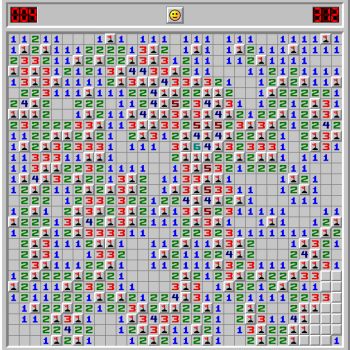
Minesweeper is a timeless puzzle game that tests logical thinking and careful planning. The player is presented with a grid of hidden squares. Some squares conceal hidden explosives while the others are safe to uncover. When a safe square is revealed it displays a number that indicates how many explosives are hidden in the eight surrounding squares. The goal is to clear the board without triggering any explosives by using the numeric clues to deduce safe locations.
What Gives Minesweeper Its Enduring Appeal
The appeal of Minesweeper lies in its simple rules combined with deep strategic depth. Each new board presents a fresh puzzle that requires the player to interpret numbers, predict hidden threats, and make decisions under pressure. The game rewards careful observation and the ability to see patterns that are not immediately obvious. Because the board can be generated at many difficulty levels the experience remains fresh for both casual players and competitive enthusiasts.
Practical Guidance for New Players
For those who are new to Minesweeper a thoughtful approach can dramatically improve success. Begin each session by selecting a difficulty that matches your comfort level. The easiest boards have smaller grids and fewer hidden explosives which allow you to practice interpreting the numbers without feeling overwhelmed. As you become more confident you can increase the grid size and the number of hidden explosives to challenge your reasoning skills.
First Moves and Safe Strategies
The first click is critical because it determines the initial information you receive. Most modern versions of the game guarantee that the first click will never reveal an explosive. Use that first safe square to start building a map of the board. Look for squares that display the number zero. Those squares indicate that none of the surrounding squares contain explosives, allowing you to safely uncover a larger area with a single action.
Interpreting Numbers and Planning Ahead
Each number on a revealed square represents the exact count of explosives in the adjacent squares. When a square shows the number one you know that exactly one of the surrounding squares hides an explosive. If you can identify a square that is the only possible location for that explosive you can mark it as a danger. Many players use a simple flag symbol to remember which squares are suspected to contain explosives. Continue this process across the board, gradually reducing uncertainty and expanding the safe area.
Advanced Thought Process for Competitive Play
Experienced players often rely on pattern recognition to speed up their decision making. Certain configurations of numbers appear frequently and have well known solutions. Recognizing these patterns allows you to mark explosives or safe squares without having to count each adjacent square individually. Practicing these common patterns can reduce the time needed to solve each puzzle and improve overall performance.
Managing Risk and Probability
There are moments in Minesweeper when the numeric clues do not provide enough information to determine a single safe move. In those situations you must evaluate the probability of each hidden square containing an explosive. Consider the total number of explosives remaining and the number of unrevealed squares. Choose the square with the lowest probability of being dangerous. While this approach does not guarantee success it minimizes risk and often leads to a breakthrough.
Improving Speed Through Repetition
Speed improves naturally as you become more familiar with the game mechanics and common patterns. Set aside time for regular practice sessions. Begin each session with a brief warm up on an easy board to refresh your thought process. Then move to a higher difficulty and attempt to complete the board as quickly as possible while maintaining accuracy. Over time you will notice a steady reduction in the time required to solve each puzzle.
Common Questions About Minesweeper
- How can I start a game without losing on the first click? Most modern implementations guarantee that the first click will never reveal an explosive. Choose a difficulty level that feels comfortable and make your first click in the center of the board to maximize the amount of information you receive.
- What is the best way to handle a crowded board with many numbers? Focus on the squares that have the lowest numbers first. Zero squares allow you to clear large areas safely. Then work your way to higher numbers, using flags to mark suspected explosives and gradually reducing the unknown sections.
- Can I improve my speed with regular practice? Yes, regular practice helps you recognize patterns faster and make more confident decisions. Set a timer for each session and aim to beat your previous record while keeping mistakes to a minimum.
- Is there a method to learn common number patterns? Many players study pattern guides that show typical arrangements of numbers and their solutions. You can also create your own reference by noting patterns you encounter frequently during play.
- What should I do when I am stuck on a difficult puzzle? Take a short break and return with fresh eyes. Re‑examine the board for any squares that can be solved with a simple logical step. If no clear move exists consider the probability of each remaining hidden square and choose the one with the lowest risk.